
You Saved $50K in Value Engineering But Risked $300K in Long-Term Costs?
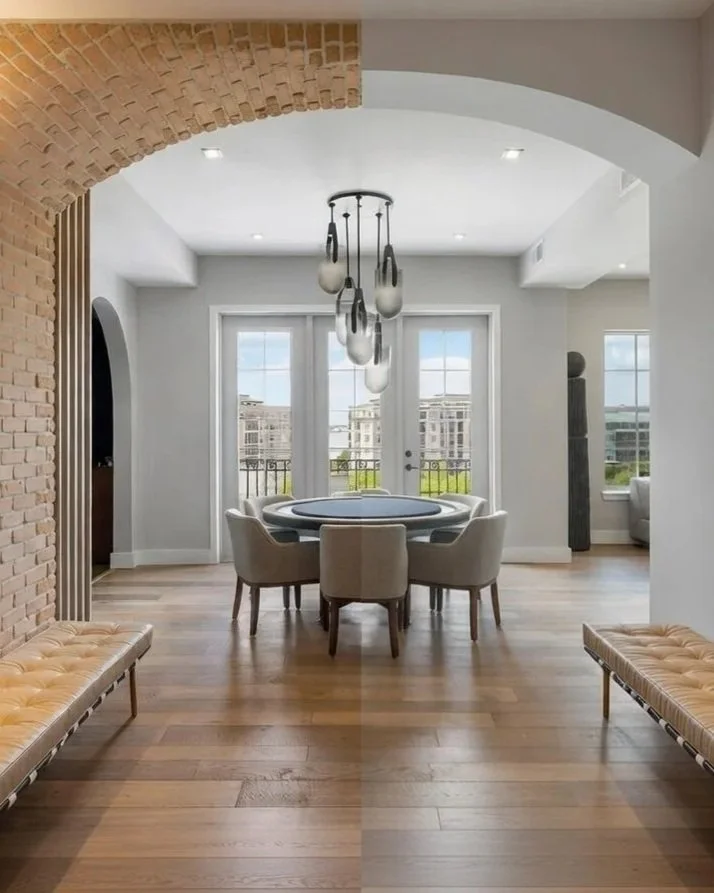
Clubhouse VE Option Remove Brick = $4,500
Value engineering smart to preserve the design as well as the budget
In multifamily development, Value Engineering (VE) is essential for controlling budgets without compromising the project's appeal. The real challenge? Executing VE smartly so it doesn't undermine pre-leasing velocity or long-term resident retention.
As interior designers focused exclusively on clubhouse amenities and multifamily projects, we've seen first hand where cutting costs still delivered real value... and where shortcuts created disasters that far exceed any upfront gains. It’s heart-burning to say the least.
Here are three critical VE mistakes we've witnessed firsthand and how they can turn short-term wins into expensive problems:
Ve mistake #1 The 'Bait-and-Switch' on High-Impact Finishes
Swapping statement pieces like lobby lighting fixtures or premium kitchen finishes for cheaper alternatives that dilute the property's premium feel. These elements drive first impressions and leasing decisions. Cutting here often slows pre-leasing and forces costly upgrades later. These are not decorative extras…they’re first-impression drivers.
These moments will have a profound negative impact.
The 3D renderings and pre-leasing visuals no longer match reality…making the project feel deceiving, even if that was never the intention.
The perceived value falls short the moment potential residents walk through the door.
The emotional connection of ‘OMG I want this in my life’ is gone.
VE Mistake #2 Ignoring Long-Term Durability & Maintenance
I’ve gone around the block and back on this one so many times I have shin splints.
I’ve heard every argument under the sun… but the truth is, I do the same thing in my own life and regret it every time. I could have had one quality leaf blower in my garage. Instead, I have four. Three broken ones I can’t bring myself to send to a landfill, and one good one that actually works.
That’s exactly how this VE mistake shows up in multifamily projects.
Saving 10–15% upfront can feel like a win…until it isn’t.
We see it when:
Unit flooring wears prematurely…you replace or residents go postal leaving negative reviews.
Common-area seating needs replacement in 3–5 years. I’ve seen “budget” furniture that didn’t last one. I won’t specify FF&E like that anymore. It’s time-consuming, mentally exhausting, and painful to the wallet.
Finishes don’t hold up to real life… especially when someone’s kid decides he’s Batman.
These decisions don’t always show up clearly on day one.
But they will show up in your next years budget…just to trigger a domino effect, pulling dollars from other priorities, compressing margins, and value engineering the next year’s project because you can no longer afford it.
ve mistake #3 Not Fully Updating (or Following) the Final ID Construction Documents
Too often, VE changes are requested…and then the project proceeds without strictly following the updated set, or without requesting a new one when additional cuts are made.
This is where projects quietly unravel.
The result isn’t efficiency. It’s field improvisation, excessive RFIs, change orders, that erase the original savings.
The true cost of poorly executed VE isn’t just measured in dollars. It shows up as rework, delays, reduced leasing performance, and diminished resident satisfaction. That last one may be the biggest risk of all.
Google reviews can’t be removed—but they can be damaging.
I’ve seen the horror shows firsthand. It’s painful.
Despite warning that there are ten “whys” behind every specification, only one is visible on paper. Without requesting an ID review of the swap, the other nine reveal themselves in the field… when it’s too late.
What follows is predictable:
Improvised decisions because floor finishes land at different heights, brick lacks corner pieces, or a faucet simply doesn’t reach the sink. I could go on.
Excessive RFIs, re-selects, or even demo (see fireplace below which they didn’t demo and well…they should have…because someone is sitting in front of that fireplace on the third floor and thinking…🤔)
Change orders that really slow turnaround and escalate costs.
Time overruns. I’ve seen delays stretch into a year…sometimes more.
Any savings gained through VE are quickly erased.
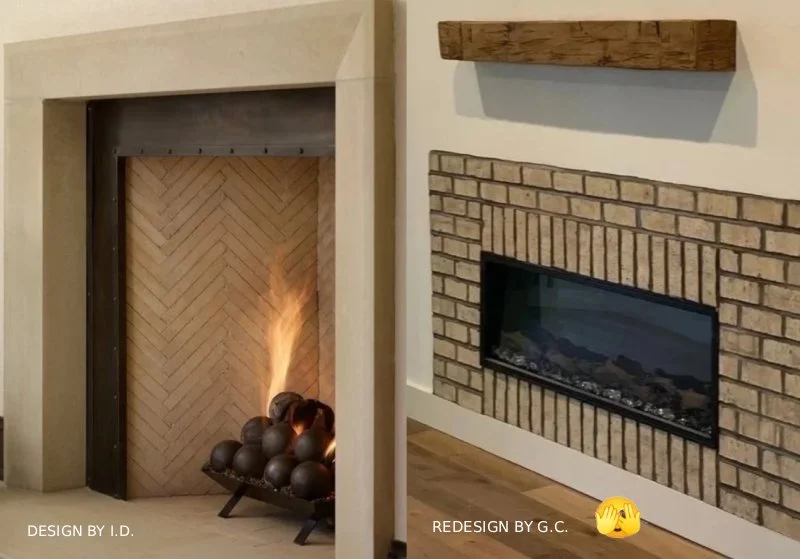
the better approach; trust, teamwork, and collaboration
Value engineering doesn't happen in a vacuum, even if it’s behind the scenes and not overt. It's woven through the 5 phases of the design process. In Schematic Design (Phase 2), we flag high-impact features like lobby lighting early to avoid bait-and-switch cuts that compromise the design. We are on-board knowing this is going to be great for the rendering, then later we will get the ‘look for less’
By Design Development (Phase 3), we're finding ways to make that high-end design maintain the vision without departing from the vision and those glorious 3D Renderings used in the marketing material.
Construction Documents (Phase 4) is where we're sometimes asked to update IDs for VE savings, dodging change-order nightmares down the line.
In Construction Administration (Phase 5), ask for another VE set if you need to trim further. This phase happens the least in our experience, but the install reveals the other ‘why’s’ behind our choices…and often says what you didn’t want to hear, like durability risks or field fixes.
Designers bring deep insight into ROI. Ours just doesn’t live in spreadsheets. Our understanding of value comes from knowing how space impacts people. How experience, comfort, flow, and materiality influence daily use, pride of place, and long-term satisfaction.
